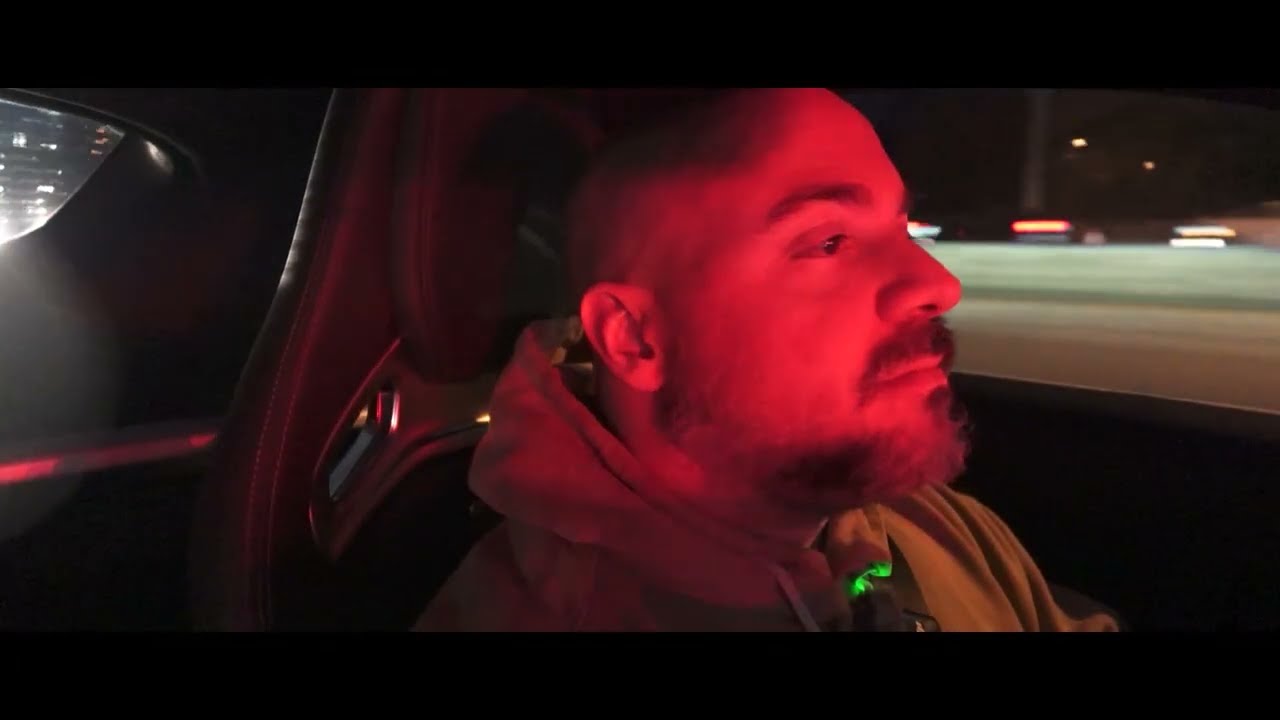
From the ExperiencedDevs subreddit, this Redditor wanted to hear how folks navigate the idea that there's ALWAYS more to do in software development. Are we ever REALLY done? Does that backlog actually have a finish line?
📄 Auto-Generated Transcript ▾
Transcript is auto-generated and may contain errors.
Hey folks, we are going to experience devs. And this one is the crushing weight of always having to do more, which sounds pretty intense, but not as intense as the stupid beeping in this car. So, I think this is a interesting one cuz it's kind of like kind of philosophical, but I I think that there's probably some people that they don't resonate at all with this and they're like, I don't know, man. Like, sounds like a you problem. I think there's probably other people that um that really can relate to this and I figured it'd be kind of interesting to talk through. Um and I've kind of had some similarish conversations about this with different people uh in terms of like prioritizing things and stuff like that. Um so I don't know, this will be kind of a good exercise for me to collect my thoughts and opinions on it as well.
So, as always, if you enjoy the channel, please leave questions below in the comments. And of course, if you want to submit stuff anonymously, just go to codemute.com, submit questions there, and I will try my best to answer your question on a video. So, the points that this person starts to bring up in their post on experienced devs, it's like, look, there's no like the work is never done, right? like there's, you know, we could hire 10 times as many developers and we could do more and like there's always more um and we don't even have all those developers. So the the reality is like there's this endless stream of work that has to get done and um you know bugs to fix, features to add.
And the way they set it is kind of like kind of kind of makes things feel meaningless when you have like, you know, the one feature you're doing and it's already going to take you a few days or perhaps weeks or something and you get that done and it's like there's still like an infinite amount of more work to go do. They kind of mention things like uh having knots in their stomach because of it. like I think truly like they're it's like an existential kind of uh challenge to navigate for them and I like I get it um because I see this in different kinds of work for myself and I'm trying to find a good way to to elaborate on this. So, I totally get the idea of like like the it's almost like the work is never done, right?
When you're building a product or a service and trying to deliver value to people, um it's like yeah, there's the code could always be more clean is like is still always going to be one more thing on the list. Even once you feel like you've added all the the features and fixed every last bug, it's like yeah, but the code could be more clean. But even without that, there's all these features that you want to keep delivering to um you know, listen to user feedback or to come up with new innovative ways that people can use your product, you know, solve their problems in different ways. Um it just it truly Oh, man. This is going to be an accident. No, we're good.
Um there truly just is like this endless stream of work and you know the first first comment I saw in the thread was kind of like can't remember exactly how it was said but someone was kind of like so what man like there's only so many hours in the week right like you can only kind of do what you can fit into a week and like that's that that's what it is and as kind of uh I don't know like as as simple as that might sound I I get it right. So, I get like both sides to this where seems like there's an endless amount of work and it seems like, you know, on the flip side, you only got so many hours in the week to go do the work. And I I think that the the latter around like having this constraint is is the most real part that we have to work with.
So, um, you know, when this has come up in conversations that I've had with people, and I mean like in the in the not like from a philosophical perspective, but like a a workplace perspective, like, hey, I have a million things that I have to go do. How do I stay on top of them? Like, hey, Nick, how do you do that? I'm like, I don't have a magic system. I wish I did. Um, but maybe some of the magic is like I've accepted that there's always an endless stream of work to do. And again, I was kind of saying this at the beginning of recording this. I think some people will resonate with it and other people just won't. And I think for me, I've had to shift from being like, cool, how do I get done where done is like I have finished all of the work because like that's when I'll feel accomplished.
I've gotten all the things done. I am done the work. There's nothing left. That doesn't happen. So, it kind of feeds this like this sort of feeling or this experience that this person's describing on Reddit where it's like that just isn't an end state. And if you're trying to constantly look for that or you're thinking like why isn't it happening? Where is it? And that's the framing you have. I I I can totally get why that's going to give you like like an existential crisis or anxiety around all of this because you're looking for something that I just don't think is real. And in fact, this person's acknowledging it's not like that's just not how things are. But I don't think that they've sort of accepted that mental framing for it. And instead, when you know, like I said, I'm not perfect at this by any means, but I've tried to accept more that like, look, there is far more work that I'm supposed to be getting done that I could ever get done, right?
As an engineering manager, there's far more work for my team that we could be doing than they can do. And it's not because there's any fault with my team. It's because there's so much to do. And by the time we're making progress on that stuff, there's more stuff coming. There's an endless amount of it. And so instead of being like, oh no, I'm failing at all this. We're never like, we haven't gotten to 100% complete, it's kind of like, well, I accept that for my team and I think they're doing an awesome job. They're delivering value. They're they're moving forward, but they're not done all of the work that's ever existed for the team and will exist for the team. that's never going to happen. And it's the same for me. I have work that I'm getting done. I have stuff that has due dates on it specifically.
I have other stuff that that doesn't specifically have due dates that I have to make progress on. And I've had to kind of come with to terms with like you're never going to finish everything. But I think for some people, depending on how you're looking at this, that's either like, you know, panic mode, like, what do you mean I'm not going to finish everything? That sounds terrible. Like, you know, I I don't want to live a life like that. And other people, it's kind of freeing. And I say this as someone I think I experience this differently depending on the things I'm working on whether that's like you know my personal stuff or at work maybe even if at different points in my career but um I feel like it is a little bit freeing because it's it's one thing that I have to acknowledge
I cannot control and I feel like sometimes um at least for myself if I'm like I need to be able to control is um and I can't like that's where it's frustrating and that's where it's like you know I have challenges with it because I'm like currently not in control of it. I need to be in control of it. How do I get the control over this sort of this variable in my life and it's just not it's just not one right? There is always more work to do outside of my control. That's not that's not a thing that I control. So if I accept that then I go okay well what are all the things that cause me either anxiety around this or it's like a problematic thing in my mind when I think about that and I have to remind myself like it's
not in my control right so this feeling of like well when am I going to get done I'm trying to to finish all the things so I can finish everything on my to-do list before I can feel accomplished or happy I'm like the number of things on my to-do list is not in my control because If I think about it, there's an infinite number of things on there, right? Like I have today's to-do list, maybe tomorrow's or maybe I have some things for this week, but if I keep living, there will be more things on that to-do list always. So like again I think it's reframing things and it becomes a little bit freeing because the other thing that I saw in some of the comments on this thread was like like yeah like the amount of time is fixed right the amount of people
that you have this is for like for a software development team the amount of people is temporarily fixed right like depending on your influence in the company or their needs or desires like they could hire more people they could turn turn on more AI and have more things get done. But the reality is like even when you add more people, like you can't add an infinite number of people to go solve an infinite list of things to go do and say that you get it done. That's not how infinity works. Um, and certainly things don't scale that way. Even if you could come up with an infinite number of people, which if you can do that, by the way, let me know because I'm very interested. We're getting through that light. Everyone else did it. We're doing it, too. Um, you can't see the light. So, it was very very green.
So, yeah, like it's uh it doesn't like infinity doesn't scale, right? So, it's not in your control. But what is in your control? And like this Reddit thread was saying, the priority at least to some degree. Someone can tell you the priority. How you actually prioritize the work that you're doing is a different story. But what you choose to do next, what you choose to tackle next, like that is a thing in your control. Like I said, you might say, well, no, like my manager sets the priority or the business sets the priority. like yes, but again if we're talking about that like it's a it's a variable that can be influenced, right? The number of things to be delivered is infinite. So we have influence over priority and ultimately that is the thing that we we can spend time on. So you can have conversations at work about like is this actually a priority?
Can we discuss what this priority looks like? Um when someone tells you the priority list of work like how you actually spend your time trying to accomplish that work you might break it down into different sets of priorities. like those are things that you get to focus on. So again, I think for me this whole sort of existential problem of like I get a lot of anxiety around um you know the work seemingly being infinite and kind of feel feeling meaningless to get individual things done. I just feel like that's I've mostly moved on from that kind of feeling because I I've definitely have experienced that where it's like what's even the point? Like that's how it feels. Um obviously you know that when you're getting work done and it's accomplishing a goal like there's positive impact from that but it can feel like kind of meaningless.
Um, I'm not going to make this video like 60 minutes like it says the drive is going to be because I don't want to put everyone to sleep with like this weird sort of philosophy kind of thing. But, um, I I do think that I experience this a little bit more um, where I am not feeling the value get delivered. And I'm kind of thinking about this maybe for the the first time as I've been kind of chatting to all of you lovely people. Um, so I've been mostly kind of talking about work, right? And I think that for me in places of work, there's a little bit more of an obvious connection to I work on something, we deliver it, there's value or perceived value associated with, you know, finishing that work. And oh, come on. Why is this happening? No, Riven. You're not going to try to overtake me.
There's literally a line of cars. You're not getting anywhere any faster just cuz you have a Rivian. And so I feel like it makes, at least for me, this conversation a little bit easier. You guys, this Rivia is not even staying in this lane. Get out of here, pal. Um, it makes it easier for me to kind of work with it or rationalize it or like accept, I guess accept is the word. I can accept that there's this infinite stream of work cuz I'm like, I know that as we make progress and deliver the individual pieces going into this, that there is value delivered along the way. where this seems to fall apart is like some of the side projects that I've had um in the past and like one that comes to mind like I've talked about this on code commute before uh definitely
on like other dev leader content but like for me my early dev days especially just as like trying to learn and code outside of school and whatever else like I love to program and I would 2D role playing games. And I say games plural, but it really was just like the remake of the same thing over and over. And um that feeling of like cuz if I sat there, I never I didn't have a goal of like I'm going to ship this video game and it's going to be the best. It was like it was like an infinite creation, right? I'm like like I get this part done. I'm like, there's a million more things I could go build. Like, I was really intrigued by coming up with uh if you're a role playing game fan, um loot is a huge part of role playing games.
And for me, it was like I I'm fascinated by the idea that like could I create loot systems that are influenced by different dynamics? I think like Path of Exile, if if folks are familiar with the game, they've done like obviously way more complex game than I ever could have imagined building, but um there's a lot of concepts in Path of Exile around the itemization where I'm like, those are the types of things in my crappy 2D role playing game where I'm like trying to come up with systems like that. And for me it was just like how like how much complexity can we add to itemization because I just am fascinated by it. So I was always trying to build like these these role playing game mechanics into this game. But this again going back to this feeling of like I get some of it done.
It wasn't a feeling of like I don't feel accomplished. I don't I don't have this sense of I delivered value. So like I um I don't know like I don't have these like these milestones that feel the same. So it it feels a lot like this person's describing where it's kind of get this knot in your stomach. We're like okay like I did this one thing but I have so many more ideas. So many more. And like I said, because I wasn't planning to ship it or like I didn't have a plan to finish it. There wasn't even a story. I just wanted to like build the the role playing game mechanics. Um it was never going to be finished. It was by def by definition infinite. So, like I would get that feeling of like as I'm working through it, obviously there'd be times where I'm like just completely absorbed in like how I'm going to build something and that was the really fun part, but uh I would reach phases.
This is something by the way like I'm talking like over 20 years. Um I would have these phases where I just feel like man like it's never going to be done. Like why am I bothering? and kind of feeling like sick. Sick is like maybe too strong of a a word for it, but Oh, there's a cop coming. How do I merge on the highway when there's a cop coming? An ambulance. It's an ambulance. But he's in the lane I need to merge into. He's in the lane beside the one I need to merge into. Nice. Come on, buddy. Get in here. The entire highway can't get off the highway to let them pass. So, okay. It's going to be a little dicey here. Sorry, I got to shut up as I'm doing this because everyone has their foot on the brake. I don't even know what passed us.
Some type of emergency vehicle. Let me in. Thank you very much. Got one more to go, then it's back to talking about philosophy. I have a feeling we're just going to be sitting in traffic. When I say we, I mean me, cuz I'll turn off this video and not put you to sleep. Now that we're in the fast lane going 20 m an hour, at least not stopped. Um, yeah, that I can totally relate to that feeling of having like like a knot in your stomach. That's the point. But I if I think about it, I I feel like a lot of that's attributed to um not having like milestones that truly delivered value. I think if there was what seemed like a big milestone where I could launch the game and I could be like, "Hey, it's playable and I've worked towards that." If it's infinite beyond that and every time I'm like releasing a patch or releasing a content update.
I feel like I could have an in maybe I don't know cuz I never did it. I feel like that could be more infinite but at least I know each time I do one of those there is value that's added. And I guess for me, I'm I'm sort of speculating that it's easier to feel um okay with the infinite work stream if you can associate the deliverables with value along the way. I don't know if that's necessarily true, but uh from my couple of data points that I've thought of so far on this drive, that seems to be the case. Um, you know, like I take my my work before Microsoft. I worked at a digital forensics company. Um, again, they're they're a company today. There's still tons and tons of work to do. So, that felt like an infinite amount of work, but that's probably the best example of me feeling like, you know what, there's an infinite number of things and that's okay.
I think literally in my own experience, it's the the most comfortable I've ever been with that. And it's probably the strongest correlation to value deliverables that I've had in my life. So maybe that's why u again maybe I'm just confirming my own bias or speculation here but um I worked on the sub uh office 365 deployment team. I know there was like an infinite you know what this maybe maybe I am on to something here. So there was uh tons and tons of work to do on that team and we had tons of our own work but we also have like for good reason um work streams that kind of are like um organizationwide mandates like you know all teams need to migrate to X or um or changing a standard for things so people need to adopt Y like this kind of thing and so teams are responsible for for getting that Um, but there's like what feels like an endless work stream of that, too.
And so, back to this feeling of value. Um, I felt like, and this is just my personal feelings, right? I I feel like the the times where we were so focused on doing these organizational um mandates I guess like we would part the part that felt good was like yeah we're you know burning down um this set of work items like the count that we have left and like that's going in the right direction like that feels good but like you know I don't feel attached like uh to the value of that deliverable. I'm like, I know it has to get done. I understand that. I I I believe that, but like that doesn't excite me. I'm not like, oh, there's an there's a user on the other side of this. It's like, hell yeah. So, you know what really sucks? When you do a bunch of that and then they give you a bunch more of that.
That doesn't feel good. And it's not like it changed. like I'm like I know it's still important and I believe that it's still important truly but I don't feel like that attachment. So um I kind of get that knot in my stomach where it's like it's almost like why do we bother to do this if it's never going away? That feeling of like infinite work. Now when we were focusing more on the stuff that our team waso like going to say supposed to be doing like our team's charter shouldn't say supposed to be doing that's the wrong phrasing but if I if we were focusing on our team's charter again that there was an infinite amount of work to do there but I feel like we would land things and that would feel good.
So yeah, I think you know to summarize I think um it's kind of like changing the framing and I realize it's just change your frame of reference is uh pretty crappy uh crappy advice like you can snap your fingers and do that but um I think that's what it comes down to. Um, if you're trying to, you know, find find happiness, no, what's the word I want? You're trying to find like satisfaction in getting all the things done and that's like you're kind of uh banking on that happening so that you can feel that satisfaction. I think that you're going to be disappointed. And not only that, I think the longer you go looking for that and relying on that being the thing, probably the more anxiety and stuff you'll feel around that because it's not going to happen because there's always going to be more work to do.
So instead of, you know, continuing to focus energy into that, I would say like how can you truly how can we start thinking about this in a different way? Like that is a thing I have control over. Yes, there will always be more bugs to fix, more features to do, but like every time we do this, we're delivering value, right? There's always this opportunity for more value to go out. By the way, I'm using um the word value um kind of like in a generic sense because that could be in my opinion like things that you value. That could be things that like your the users for your business value. I'm not here to tell you how you should feel about certain things necessarily, but um for me the framing is like is if users are valuing it um personally.
So that's like motivating to be able to do and yeah ultimately I think a lot of this comes back to that feeling of if I feel that I am incrementally delivering value and there's an infinite amount of work great that's fine I will focus on what's the next priority I will have conversations around priority I'll ask questions around priority because that's the thing that I can influence I don't get to uh directly influence when the work stops. The work stops for me when I stop. So that's the you know the control I get at one point is when I want to stop. So, it's a little philosophical for this drive, but I'll cut it off there so you don't have to sit with me in this parking lot because I have a live stream that I have to do, which is a great reminder that I have other YouTube channels.
So, I am driving home right now from work, sitting in rush hour. I have a live stream that I'm doing tonight. If you are watching this, you've already missed the live stream, but that's totally cool for two reasons. One is that it's recorded so you can check it out later. And number two, I do them every Monday at 700 p.m. Pacific, so you can check out the next one. And so tonight's live stream that I'm going to be recording is a little bit unique. So I'm going to be doing uh some vibe coding, but I'm going to walk through um a couple of progressions because vibe coding is like a super loaded term now. I I can recall back in my day where when people first started talking about vibe coding, um I was, you know, people were correcting me.
They're like, "No, vibe coding is when you literally ask an LLM to do something, you take the code, you paste it, and then when it doesn't work, you give it the errors and get it to fix it, and then you paste it back for like basically having no you give no shits about what the code is doing as long as the the end result is doing the thing that you want to see." And so I think people are now using vibe coding a lot more regularly. Um somehow that we've we've gotten here and um sorry using the phrase vibe coding and what they're starting to imply because you'll see these debates online where people are like no vibe coding is totally okay and if you don't know how to vibe code then like you're just dumb. And it's like, hold on. The original definition people were talking about was literally to not give a about code and just blindly copy and paste stuff and go with the vibes.
In my opinion, that is stupid. That's not You're not going to build software in any kind of sustainable way by like purely air quotes vibing. But people are starting to use vibe coding as a phrase to say that they're working or pairing with an LLM or they're coming up with a spec to give to an LLM and that's vibing now. But like it's really we're just using vibe coding to talk about like AI assisted or AI augmented development which like it's fine. I mean, you can have your opinions about that, too, but I I think that we have a bit of a misnomer. Uh, people are saying the same thing and meaning different things. So, I'm just going to use this live stream to kind of go through a couple of variations of like using AI tools, this progression. Um, probably should have spent more time planning this, but um, I want to do something like using chat GPT to go spit out some code.
and we're going to that's probably the closest I'll get to vibing it where we'll take the code out of chat GBT which by the way doesn't have any context about what you're doing aside from what's in your conversation right so we're going to copy and paste that stuff over I'll do something in C# I have to yawn so bad there it is okay um and then the only context it will have is what we feed back to it so we'll build something that way something quick. And then I'm going to start using co-pilot in start inside of Visual Studio. Sorry, I can't speak. And when we're using C-Pilot that way, we're going to see that now it has more context, right? I still have to direct it, but instead of me going to manually or explicitly try to go give it every single piece of information that I think it might need, I can do a little bit of that, but also um it's able to kind of search the code.
And if we have time, we're going to get over to um I don't know, maybe it's not even worth it. I was going to say like uh the last thing that I wrote about in my newsletter for this was around using something like GitHub Copilot um with their spaces and you can do like multi-repository kind of thing. Um but yeah, we might only get kind of like through two iterations. The first one that I'm skipping over is like because we did this on live stream before. Maybe I'll do it. Um, but using GitHub Spark and just getting something like super quick output. Do I have to move over lanes here? Come on. I do. And so that will be this live stream that I'm driving home for. But um likely next week we'll go back to uh a non-coding live stream. Most of these live streams are not me writing code.
And um what that means for you is that if you enjoy code commute, a lot of what I do on the live stream is a topic from code commute. It's uh generally the topic that had the most engagement or views from the week and then I write a newsletter article about it and then we talk about it on code commute. So, or on the live stream. So, check that out. I have programming tutorials and AI tooling tutorials on Dev Leader. And then I have Dev Leader Path to Tech, which is where I do my resume reviews. So, thank you so much for watching. I'm just going to pass this car and then I'm going to turn this camera off and I will see you in the next video andor live stream. Take care.
Frequently Asked Questions
These Q&A summaries are AI-generated from the video transcript and may not reflect my exact wording. Watch the video for the full context.
- How do I cope with the feeling that the work as a developer is never done?
- I cope with this feeling by accepting that there is always more work to do than I can ever finish. Instead of trying to get everything done, I focus on delivering value incrementally and prioritize what I can influence. This mindset shift helps reduce anxiety and makes the endless stream of work feel more manageable.
- What strategies do you use to manage an infinite to-do list in software development?
- I remind myself that the number of tasks is infinite and not in my control, but what I can control is how I prioritize and choose what to work on next. I have conversations about priorities with my team and stakeholders to focus on the most important work. Accepting that I can't finish everything but can deliver value in increments helps me manage the workload.
- Why does delivering value help with the anxiety of endless work?
- Delivering value helps because it gives me a sense of accomplishment and purpose even though the work is infinite. When I can see that the work I'm doing is making a positive impact for users or the business, it feels meaningful. Without that connection to value, the work can feel meaningless and cause anxiety, especially in projects without clear milestones or goals.