My little May 2025 vacation is to... Arizona! My wife is attending a conference and I am tagging along!
Here's what I'll be doing when I have downtime.
📄 Auto-Generated Transcript ▾
Transcript is auto-generated and may contain errors.
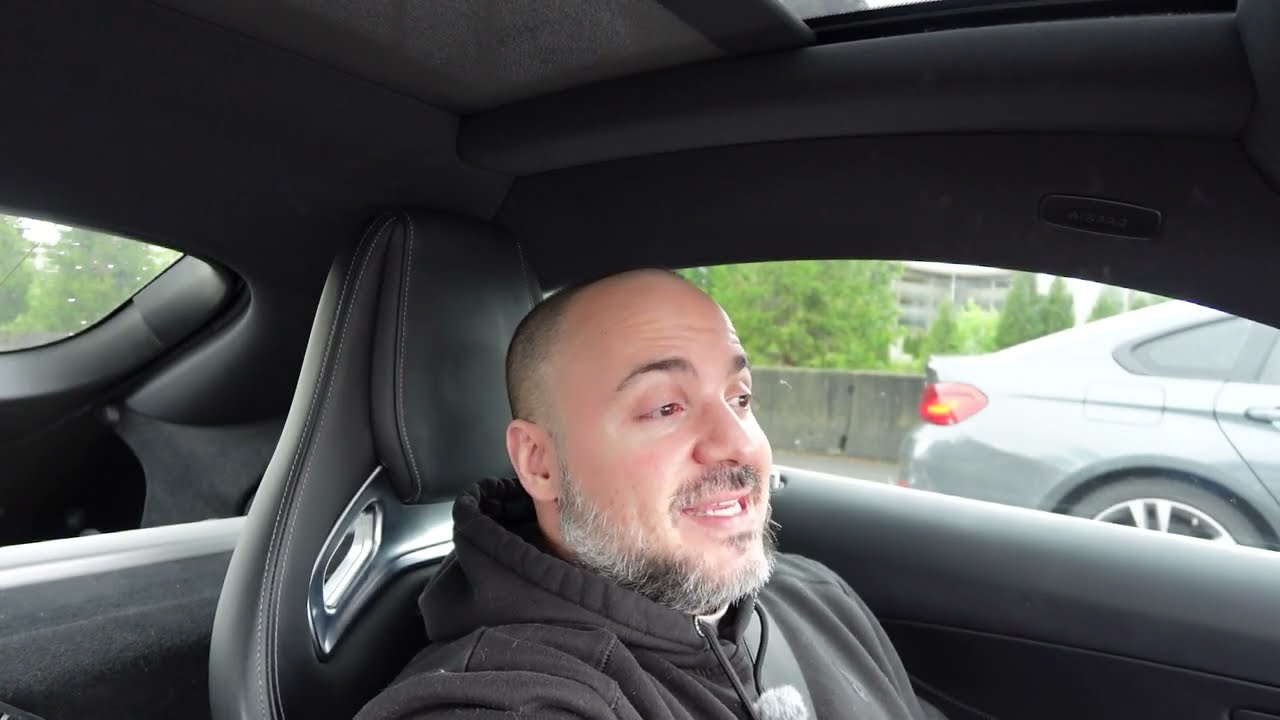
Hey folks, I'm just on the highway. I'm almost at work. I figured I'd just cut the last video where I was cuz I didn't have any more to add. And I'm just going to do a quick video in the next few minutes before I get to the office. Talk about what's up for this week. So, generally on Code Commute, I've been getting out um a solid number of videos for weeks now. I think I've been averaging like 8 to 12 somewhere in there. And uh I have a vacation at the end of this week. So or midweek, so Wednesday, and I come back next Tuesday. I think Monday's a holiday. So I'm going to be traveling. We're going to Arizona. I'm going with my wife and um I I'm making this video just to kind of catch you up on like probably what things are going to look like over the next week.
So uh I plan on bringing my camera and stuff with me. Yes, I know it's vacation, but there's a couple things I want to do. And the way that this trip is working, my wife's going for a conference, so she gets to pick like the different uh sessions and stuff she wants to go to or uh events and things like that. Some of them I will go with her, others I'm not. So, what I don't do on vacation is I'm not like a solo explorer. I don't know why. I've never been this way. So, I'm not going to show up in Arizona. my wife's gonna go to some, you know, specific event and then I'm gonna like go tour around Arizona by myself. Not for me. It's not how I operate. So, I'm bringing my computer. Um, I'll be probably coding in the hotel room or something and there's a good opportunity for me to make some videos.
So, I will try to keep up with code commute. I will try to get my at least video done per day. Um, that way I can get some content out. my main YouTube channel, which is Dev Leader. I've sent over five videos already to the editor for this weekend next. And then I want to get a couple more. I want to get some resume reviews done. I'm behind a little bit. So, I started taking notes for those and I'll put those up. And that's a good reminder for folks. My main channel is Dev Leader. Um, it has programming tutorials and stuff, but if you want your resume reviewed, go over to Dev Leader, check out the playlist for resumeé reviews and um, you will see that there's uh, instructions in like the first minute for how to submit. So, happy to try. It's totally free for you.
Cost me money to pay the editor to do it. Um, but I been finding that it's a valuable service for people, so I want to keep offering that. So, check that out. I'll get a couple more of those up or at least sent over to the editor because what I don't want to have happen is I come back from vacation after the weekend and then I'm in another week where I haven't prepared any content. So, I'm just trying to do two weeks worth of content ahead of time. So, got that. But then there's another thing that I wanted to do and uh I'm going to post this on my dev leader channel. So, it won't be on code commute, but folks on code commute might find it very helpful because that the resume review stuff I think was born out of code commute and uh I do it on my main channel because I just want I want code commute to be like this, right?
I can turn on my camera, make a video, not worry about it. Dev leader is far more like I don't know, polished. It's like really I'm trying to trying to take YouTube seriously over there. play by the rules and all that with, you know, making thumbnails and whatnot. Code commute. I'm just like whatever, man. Camera's on, mic's on. I hope um I've done enough of those without the mic on and videos up. Hopefully, it's helpful. But what I want to do is I'm going to take it's a good way to explain this. I want to do behavioral interview questions. So, what I want to do is I'm going to make a playlist that's just me answering behavioral interview questions and probably each video will be short, probably on the order of like say 5 minutes. And what I'm going to do is create this playlist where uh the video will start.
I'll probably just I haven't done this yet, so I'm explaining you the thought process. I'm going to read out a behavioral interview question. Um, I will try to do a variety of these. Like I will start with engineering manager ones just because they're they're much more applicable to me and then I'll try to branch out and just do a bunch of other ones. But I'm just going to answer behavioral interview questions. So I'll spend, you know, the rest of the video answering them. And then um at the end of it, I haven't decided on this yet, but um at the end of it, I'll probably try to like clarify if I had prepared for that question or not because what I'm hoping is that in the beginning, a lot of the questions for me are going to be very very new and like I haven't thought of the scenarios and I want to show you sort of that.
Is it snowing? Am I going crazy? It's either snowing or someone had something on their car. Um, I want to show you what it looks like if I were in an interview and someone asked me a question that I wasn't like fully prepared for and how I still want to go navigate it. So, there might be times where I record a video to one of those questions and I'm like, I'm not prepared and I try to answer and I might do another variation after I have prepared, but I want to give you that context. You got to let me in, buddy. So, I'm excited for that. I think I'm hoping it's going to be helpful for people. Um, I have a course on on uh behavioral interviews, soft skills, bunch of stuff that's not just like C. So, those courses are on dome train if you're interested.
But, um, I have been on the interviewer side more often than I've been on the interviewe side. So, I am very out of practice as an interviewee. Very out of practice. I know what things to look for, what I'm expecting when I'm asking questions, but it's kind of weird. It's like uh because I'm not actively practicing it, there's going to be blind spots even for me, right? So, I want to go make these videos. I think they're going to be helpful for me. Um they're probably going to call out some things I'm like, "Oh, yeah. When I talk about this kind of stuff, I should mention should mention this." I'll have an opportunity to, you know, critique myself. But I'm hoping that going through this will help other people where they're like I don't even like this question comes up like how do I even approach this?
Right? What you'll notice, I haven't recorded them yet obviously, but I think what you'll notice is that when I'm asking myself these behavioral interview questions, if it's like, tell me about a project where you worked on X and this happened, right? A lot of the time software engineers will talk about the details, the technical details of the project for far too long. Far too long. They'll go 10 minutes into it and they haven't even talked about the behavioral part. And this is a huge misstep because you have other parts of your interview that are gauging your technical skills. And on the behavioral interview side, they'll say, "Tell me about a project or a time where you worked on a project." The focus itself is not like the technical details of the project. So if you're talking about like how the product works and how it was built and all of that and you're going at that for a long period of time like it's it's uh it's wasting time.
You're kind of using up your time ineffectively because the goal of the question is to understand your behavior. Okay. So it's really common. I get it. Like we're engineers. We're technical people. The technical part gets us excited. Cool. but um it's just not an effective use of time for a behavioral interview question. So, what you want to do is briefly introduce what it is so that there's some context, but then you want to get into explaining the scenario that's going to demonstrate like why this behavior comes up. And it's not snow. It's like some type of like puffy seed off of a plant or a tree or something cuz they're still floating around. But on the highway it kind of looked like snow was coming down. I'm not crazy, but maybe I need glasses. Um, yeah. So, that's my plan. I'm going to get a bunch of those recorded in my in my downtime.
I won't do like actual YouTube videos um because I'm not going to bring my full setup. I'm just going to bring this camera and talk into it and I'll have my laptop for coding stuff. Me working on Brand Ghost while I'm while I'm gone. I love working on Brand Ghost. Um there's times where I don't right where I'm feeling burnt out from it. Uh but I'm feeling pretty good right now. So, we'll be doing that. was adding in a couple of features uh over the weekend. So, one thing I added is that if you have I don't know like I don't know how many people on that watch these videos are like actively on social media, but you can repost things on platforms like Twitter and and whatever else, right? So, Twitter has what's called a retweet or like a quote tweet. If you quote tweet, you write more text and then share the post.
If it's just a retweet, then it's automatically just like a a bumped up tweet in your feed that's of the same thing. And um there's some strategies around this kind of stuff for getting some more impressions. So, for example, if you have a global audience, which I do, there's a lot of people either from India or Europe uh that engage with my content. uh if I post something and it's you know noon for me I don't even know what time it is for them in Europe or in India and if it's not a convenient time where they're on social media they might not even see my post based on how the algorithms for the feed work. So, the idea is that if you can uh strategically repost some of your stuff, say 12 hours off, now you're potentially opening up the opportunity for people to see your content at a different time.
And when I say repost, I don't mean go post the entire same thing again. It's a feature that's built into these platforms to repost. Usually you repost other people's content so that people can discover it on your feed, but you can also do it for your own. It's there's nothing stopping you from doing it. So I built that for Twitter and I'm going to be triing it for myself, but I got to build more stuff. We have a huge front end change that's that's coming in, so I really want to make some progress on that, too. But I'm not great with front ends, so we'll see. Anyway, that's a quick update. I will see you next time. Take
Frequently Asked Questions
These Q&A summaries are AI-generated from the video transcript and may not reflect my exact wording. Watch the video for the full context.
- How do you plan to manage content creation during your vacation in Arizona?
- I plan on bringing my camera and computer with me to Arizona, and even though it's a vacation, I intend to code in the hotel room and make at least one video per day for Code Commute. I've also sent over five videos to the editor for my main channel, Dev Leader, and I want to prepare two weeks' worth of content ahead of time to avoid falling behind after my trip.
- What is your approach to answering behavioral interview questions in your upcoming video series?
- I plan to create a playlist where I answer behavioral interview questions, starting with engineering manager ones. I'll read the question and then answer it, sometimes noting if I was prepared or not. My goal is to show how to navigate these questions, especially when unprepared, and to emphasize focusing on the behavioral aspects rather than technical details, which many engineers tend to over-explain.
- What advice do you give about discussing projects during behavioral interviews?
- I advise that when answering behavioral interview questions about projects, you should briefly introduce the project for context but avoid going into too much technical detail. The focus should be on demonstrating your behavior and how you handled situations, because the technical skills are assessed elsewhere in the interview. Spending too much time on technical details during behavioral questions wastes valuable time and misses the point of the question.